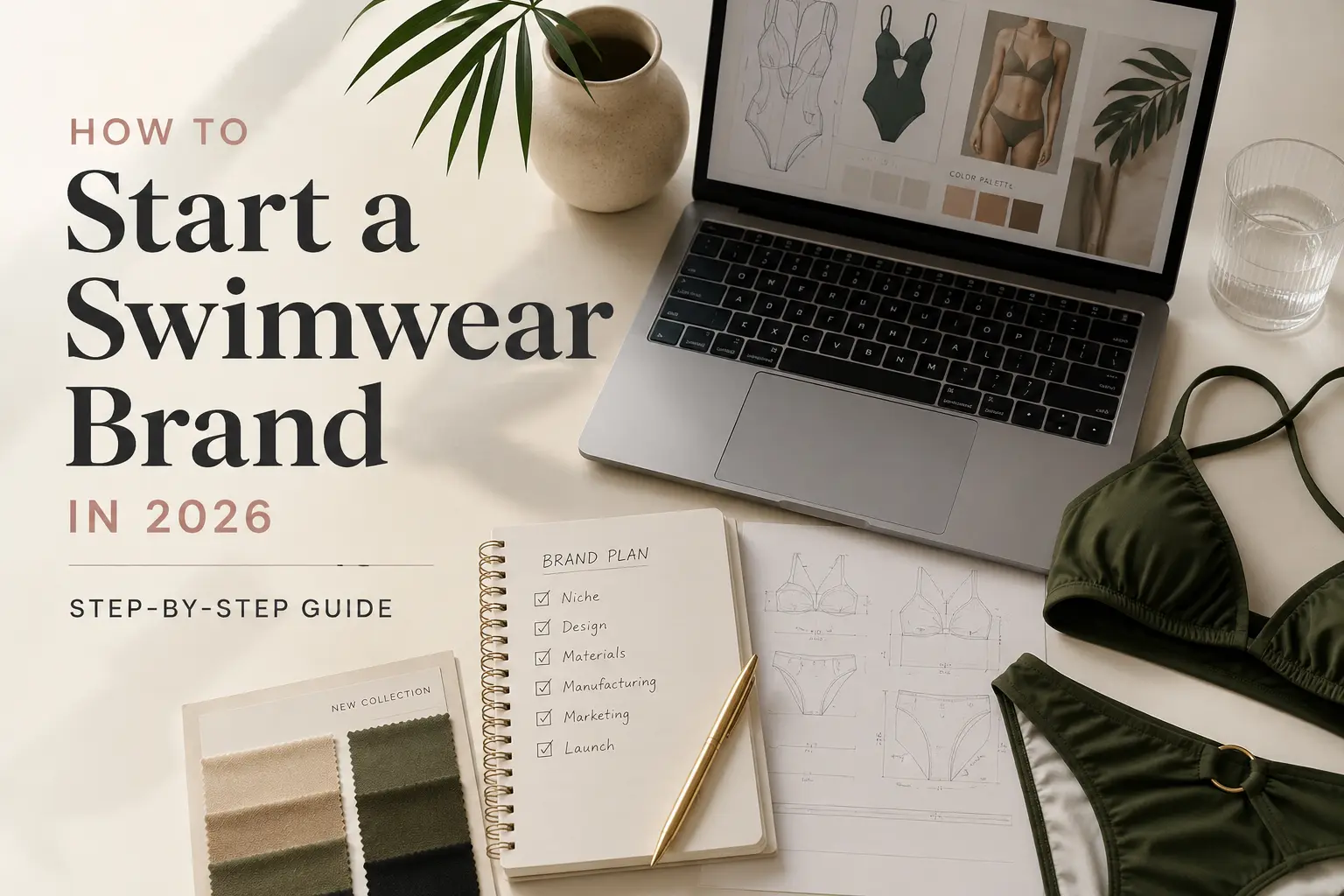
Starting a swimwear brand has become more accessible than ever. With social media, ecommerce platforms, and global manufacturing networks, even small brands can launch collections without owning a factory.
However, many new swimwear brands still struggle with the same problems:
- Choosing the right manufacturer
- Understanding MOQ requirements
- Managing sampling and production timelines
- Finding reliable fabric suppliers
- Building a profitable first collection
In this guide, we will walk through the complete process of starting a swimwear brand in 2026.
1. Define Your Swimwear Brand Positioning
Before contacting manufacturers, you need to understand what kind of swimwear brand you want to build.
Ask yourself:
- Who is your target customer?
- What price range will you sell in?
- What style will define your brand?
- Will you focus on fashion, sporty, luxury, sustainable, or minimalist swimwear?
Your positioning will affect:
- Fabric selection
- Manufacturing cost
- MOQ requirements
- Packaging
- Branding
- Marketing strategy
Many successful swimwear startups begin with a small but focused product line instead of launching dozens of styles at once.
2. Research the Market and Competitors
Study existing swimwear brands in your niche.
Pay attention to:
- Product styles
- Fabric choices
- Price points
- Branding
- Packaging
- Social media content
- Customer reviews
This research helps you identify:
- Market gaps
- Trending styles
- Opportunities for differentiation
Pinterest and Instagram are especially useful for swimwear trend research.
3. Prepare Design References or Tech Packs
You do not always need fully professional tech packs to begin.
Many manufacturers can work from:
- Reference photos
- Sketches
- Existing samples
- Inspiration boards
However, more detailed information usually leads to faster and more accurate sampling.
Useful information includes:
- Fabric type
- Color references
- Logo placement
- Measurement requirements
- Hardware details
- Packaging preferences
4. Choose the Right Swimwear Manufacturer
Choosing the right manufacturer is one of the most important decisions for your brand.
Many startups fail because they choose factories that are not suitable for small or growing brands.
Important factors to evaluate:
- MOQ flexibility
- Sampling capability
- Communication speed
- Production experience
- Quality consistency
- Fabric sourcing support
- Lead times
- Private label capability
If you are launching a new brand, working with a manufacturer that supports low MOQ production can significantly reduce inventory risk.
For brands looking for flexible manufacturing solutions, you can explore our:
5. Understand MOQ (Minimum Order Quantity)
MOQ is one of the most misunderstood parts of apparel manufacturing.
A factory may require:
- MOQ per style
- MOQ per color
- MOQ per fabric
For new swimwear brands, lower MOQ production is often the best starting point.
Benefits of low MOQ:
- Lower inventory risk
- Easier product testing
- Faster launch
- Better cash flow management
- More flexibility for seasonal collections
As your brand grows, production quantities can scale gradually.
6. Develop Samples Before Bulk Production
Sampling is a critical stage.
During sampling, manufacturers will test:
- Pattern accuracy
- Fabric performance
- Fit
- Construction
- Printing
- Hardware
- Label placement
Most brands require multiple revisions before approving production samples.
Typical sample timelines:
- Initial sample: 7–14 days
- Revisions: 5–10 days
Do not rush this process. Strong sampling reduces expensive production mistakes later.
7. Select the Right Fabrics
Fabric quality strongly affects:
- Product feel
- Stretch
- Durability
- Customer satisfaction
- Brand positioning
Common swimwear fabrics include:
- Nylon / Spandex
- Polyester / Spandex
- Recycled fabrics
- Ribbed textures
- Compression fabrics
Ask your manufacturer about:
- Fabric GSM
- Stretch percentage
- Color fastness
- UV resistance
- Chlorine resistance
Sustainable fabrics are becoming increasingly popular in the swimwear industry.
8. Prepare Branding and Packaging
Private label swimwear brands usually customize:
- Main labels
- Care labels
- Hangtags
- Packaging bags
- Boxes
- Stickers
Consistent branding improves perceived value and customer experience.
Even simple packaging can make a new brand appear more professional.
9. Plan Production Timelines Carefully
Typical swimwear production timelines:
| Stage | Estimated Time |
|---|---|
| Sampling | 1–3 weeks |
| Material sourcing | 1–2 weeks |
| Bulk production | 3–6 weeks |
| Shipping | 1–5 weeks |
Production timing becomes especially important before summer seasons and major sales periods.
Always add buffer time for revisions and logistics.
10. Launch Small and Scale Gradually
Many successful swimwear brands started with:
- 2–5 styles
- Small production runs
- Limited color options
Launching small allows brands to:
- Test the market
- Reduce inventory risk
- Improve products faster
- Build customer feedback loops
You do not need a massive collection to build a successful swimwear brand.
Final Thoughts
Starting a swimwear brand requires more than attractive designs. Manufacturing decisions, fabric quality, MOQ strategy, and supplier relationships all play a major role in long-term success.
For new and growing brands, flexible manufacturing and reliable communication are often more important than simply finding the cheapest factory.
If you are currently exploring swimwear manufacturing options, feel free to contact our team to discuss:
- Low MOQ production
- Private label swimwear
- Custom bikini manufacturing
- Fabric sourcing
- Sampling support
- Packaging solutions
We work with brands worldwide and support both startups and established businesses through flexible production solutions across China and Africa.