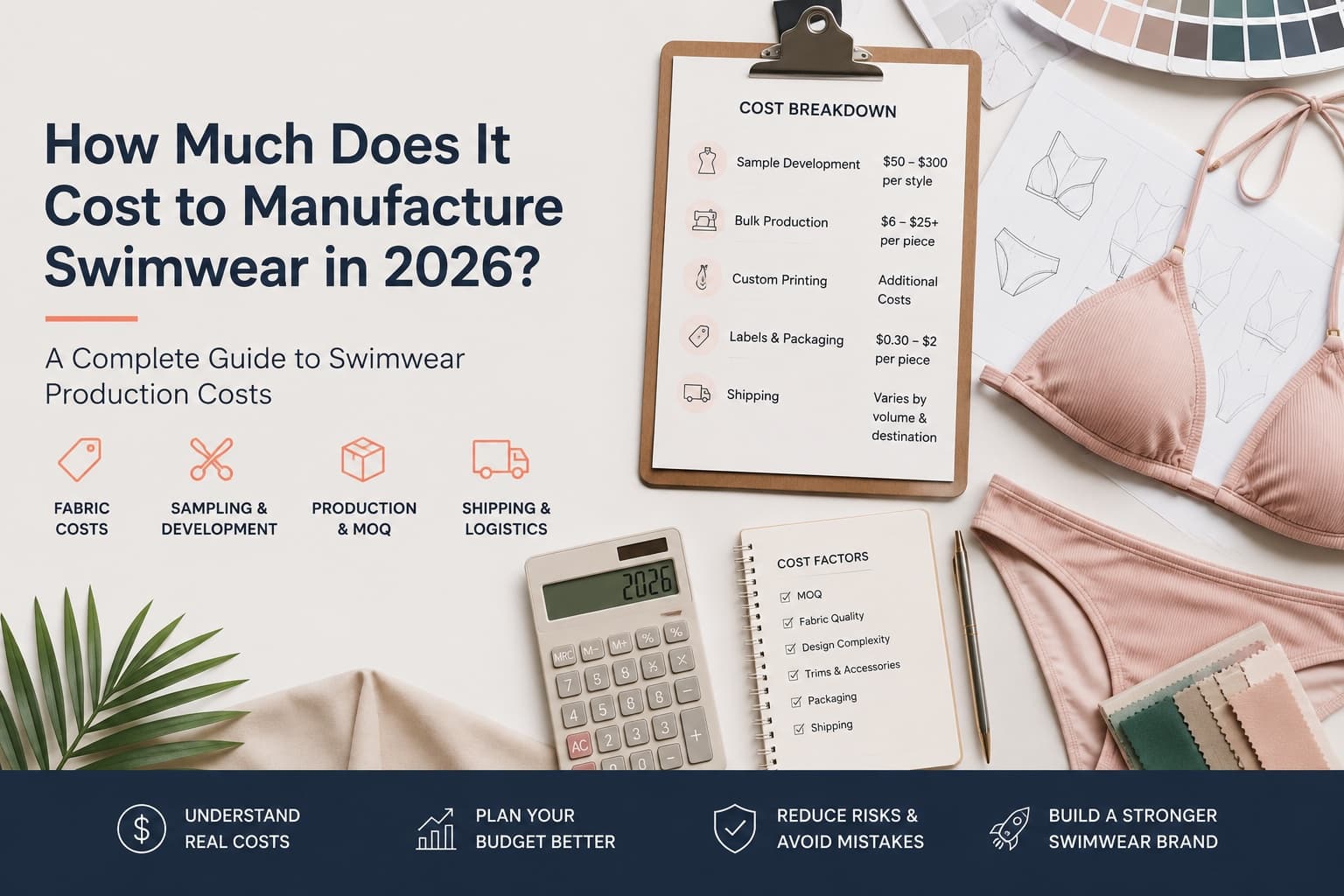
One of the most common questions new founders ask is:
“How much does it actually cost to manufacture swimwear?”
The answer depends on several factors, including product complexity, fabric selection, order quantity, customization level, and production location.
In this guide, we’ll break down the main cost components involved in swimwear manufacturing so you can better estimate budgets and avoid common sourcing mistakes.
Main Factors That Affect Swimwear Manufacturing Cost
Swimwear production pricing is influenced by multiple variables:
- MOQ (Minimum Order Quantity)
- Fabric quality
- Custom printing
- Construction complexity
- Accessories & trims
- Packaging
- Sampling requirements
- Shipping destination
Simple bikini styles with stock fabrics are generally much more affordable than highly customized collections with unique prints and premium materials.
Typical Swimwear Manufacturing Cost Breakdown
| Cost Category | Typical Range |
|---|---|
| Sample Development | $50–$300 per style |
| Bulk Production | $6–$25+ per piece |
| Custom Fabric Printing | Additional setup costs |
| Labels & Packaging | $0.30–$2 per piece |
| Shipping | Depends on volume and destination |
Production costs vary significantly depending on the factory, country, and order scale.
How MOQ Affects Pricing
MOQ plays a major role in swimwear production pricing.
Lower quantities usually mean:
- Higher cost per piece
- Less production efficiency
- Higher fabric waste ratio
- More manual handling
For example:
| Order Quantity | Estimated Cost Per Piece |
|---|---|
| 50 pcs/style | Higher |
| 100 pcs/style | Moderate |
| 300+ pcs/style | Lower |
Factories can usually offer better pricing at higher production volumes because fixed setup costs are spread across more units.
Fabric Costs in Swimwear Production
Fabric is often one of the largest cost factors.
Common swimwear fabrics include:
- Nylon / Spandex blends
- Polyester / Spandex blends
- Recycled swim fabrics
- Ribbed textures
- Metallic fabrics
Premium recycled fabrics usually cost more than standard materials.
Custom printed fabrics can also increase costs because mills may require minimum fabric runs.
Sampling & Development Costs
Before bulk production, most swimwear brands go through a sampling stage.
This may include:
- Tech pack review
- Pattern development
- Fit adjustments
- Fabric sourcing
- Print strike-offs
- Proto samples
- Pre-production samples
Sampling costs are generally higher per piece because products are made individually rather than in bulk.
However, proper sampling is essential for reducing production mistakes later.
Custom Printing & Branding Costs
Customization can significantly affect total production cost.
Examples include:
- Custom prints
- Silicone logos
- Heat transfer labels
- Metal trims
- Embroidery
- Branded packaging
Some customizations also increase labor time, which affects pricing.
Packaging & Labeling Costs
Many startups underestimate packaging expenses.
Common packaging options include:
- Poly bags
- Hang tags
- Barcode stickers
- Custom boxes
- Thank-you cards
- Sustainable packaging
Basic packaging is inexpensive, but premium branded packaging can add noticeable cost to each order.
Shipping Costs & Logistics
Shipping cost depends on:
- Order volume
- Weight
- Destination country
- Shipping method
Air freight is faster but more expensive.
Sea freight is more economical for larger orders but requires longer lead times.
For smaller startup orders, many brands initially use air shipping to simplify logistics.
Hidden Costs New Brands Often Forget
New swimwear brands frequently overlook:
- Import duties
- Fabric testing
- Sample revisions
- Courier fees
- Payment transfer fees
- Photography costs
- Content creation
- Inventory storage
Building these into your budget early helps avoid cash flow problems later.
How Startups Can Reduce Manufacturing Costs
There are several ways to lower initial production costs:
Use Stock Fabrics
Stock fabrics usually reduce both MOQ and fabric development costs.
Start With Fewer Styles
Launching with 3–5 strong products is often more effective than producing large collections immediately.
Simplify Construction
Complex designs increase labor time and production difficulty.
Focus on Best Sellers
Many successful brands scale gradually after identifying winning products.
Is Low MOQ Production More Expensive?
Usually, yes.
Smaller runs generally result in higher unit pricing.
However, low MOQ production also reduces inventory risk, which is often more important for early-stage brands.
Many startups prefer paying slightly higher unit costs rather than holding excess inventory.
Final Thoughts
Swimwear manufacturing costs depend on a combination of product design, production quantity, fabric sourcing, and customization requirements.
For startups, understanding these cost drivers early can help improve budgeting, reduce sourcing mistakes, and create a more sustainable launch strategy.
Working with a manufacturer that supports flexible production and transparent communication can make the entire development process significantly easier.